Garden.True.North
  • Blog
  • Classes
  • Picture Gallery
  • Contact

​Garden Stories

​​Garden.True.North is about gardening in Zone 4,

​sharing thoughts, ideas and tips for all northern gardeners.
Enjoy Your Garden

8/5/2019

0 Comments

 
​We once had a three-season porch that overlooked a pond and my backyard gardens.  It was furnished with typical rattan porch furniture.  We never used it.  Why?  I would guess we weren’t comfortable. 
 
I refurnished the room with cushy sofas, chairs, and a small table for meals.  Outside I added a Pagoda Dogwood and Japanese Maple (both small understory trees growing about 8-10 feet) that provided screening from our neighbors.  It made all the difference and we enjoyed the room and used it frequently.  Can a similar redo of a garden increase the use of an outdoor room? 
Picture
Now our screened porch is a screen house set right in the middle of the gardens.

Read More
0 Comments

Baptisia and a Bunny

7/15/2019

2 Comments

 
​I had visions of a sea of blue after my daffodil’s foliage melted away.  Earlier in the growing season I lost a row of Swiss Chard.  I put bird netting around that raised bed and the chard is recovering.  But my Baptisia looks like a lost cause.  A small rabbit has been sighted near the garden.  Maybe this bunny thought Baptisia is tasty since it is a member of the pea family.  So much for “tolerates rabbits” advertised with this plant.
Left to right:  Baptisia australis, what remains of my plant after the bunny, and new cultivar  'Solar Flare'.
​My garden fence was built to deter deer from ravishing my vegetables.  The fencing is not made to turn away a small bunny and there are gaps under the gates.  After being on this property for 15 seasons, this is the first rabbit.  The wolves, coyotes, fox, and eagles may be credited for the lack of rabbits; that is until now.
 
Baptisia australis, common name False Indigo, is a native plant to the eastern U.S.  In addition to being advertised as tolerant of rabbits the plant is unappealing to deer, drought resistant, and tolerate of poor soils.  I thought it perfect for my garden since it likes full sun to part shade (my garden receives about 6 hours per day) and would provide some color between the spring ephemerals and the summer bulbs that grow alongside my raised beds.   At 3-4 feet tall, it would stand out, just what I wanted. 
 
Baptisia australis was named Perennial of the Year in 2010 by the Perennial Plant Association.  It seems appropriate because this plant is hardy in USDA zones 3 to 9, has multi-season interest, is tough, and is low maintenance. According to the Missouri Botanical Garden Plant Finder: “Over time, plants develop slowly expanding clumps with deep and extensive root systems, and should not be disturbed once established. Plants take on more of a shrubby appearance and tend to open up after bloom. Trimming or shearing foliage after bloom helps maintain rounded plant appearance and obviates a possible need for staking, but eliminates the developing seed pods which are so attractive.” 
 
In addition to this native, there are now new cultivars that come in yellow, pink, violet-blue, and creamy vanilla.  Baptisia attracts butterflies with its flowering for 3-4 weeks in June.  Both its blooms and dried seed pods can be used in floral arrangements.  The common name of False Indigo refers to the use of this plant by early Americans as a substitute, albeit an inferior one, for true indigo in making blue dyes.  I originally thought that the Latin "australis" was odd for a native North American plant and found out that it means "southern".   It can also refer to Australia.  
 
I’m putting up netting around the Baptisia and hoping for the best.  Maybe next year I’ll get some blooms? Or maybe it's time for another trip to the garden center?
2 Comments

Remembering Our Friend John

7/7/2019

1 Comment

 
We lost our friend John after four decades of wonderful memories.  I met John & Marlen on their wedding day on a spring day in June 1980 and we have been having fun ever since.  John loved the outdoors and so it seems fitting to honor him with some photos of his garden this week.  He had a good eye in using sculptures, birdbaths, natural materials, and fountains to enhance his human, animal and bird visitors' enjoyment of the garden and embracing the beauty of the northwoods.   
1 Comment

Aquilegia (Columbine) Volunteers

6/19/2019

1 Comment

 
Picture
Picture
Above:  Aquilegia canadensis (native) top, Aquilegia vulgaris on bottom. 
Aquilegia canadensis is our native Columbine and is just about finishing up in my garden.  In addition I have quite a few Aquilegia vulgaris the common Columbine that is native to Europe that appear every year in my perennial beds all by themselves. My volunteers range from a deep purple to a light pink blossom.  I love volunteer plants and these are no exception. 

I paid more attention this season after seeing hybrids at Longwood Gardens in Kennett Square, PA that had a garden full of hybrids in yellow, white, rose, and purple colors.  

Picture
The Columbine bed at Longwood Gardens. 

Columbines have 60-70 species that are perennial but short-lived.  They are excellent self-seeders but deadhead if you want your purchased hybrid plant to last longer.  Of course, then you give up the self-seeding character of the plant. 
​ 
Now I wonder if I want to find some hybrids and see how my volunteers would fare with a few more colors. 
1 Comment

Springtime with Greater Philadelphia Gardens

6/18/2019

3 Comments

 
This blog post was also published on the North Country Master Gardener website.
Picture
Picture
A month ago, I joined the Winnebago Master Gardener Volunteers on a trip to the Greater Philadelphia gardens.  There is a concentration of well-known public gardens in this area of the upper Piedmont region (zone 7).  The Piedmont area is unique for growing plants familiar to both northern and southern gardeners.  I find it interesting that my upper Midwest garden has finally caught up with the springtime of our eastern seaboard four weeks later.  In early May the early bulbs were done; the azaleas were in bloom and the rhododendrons just starting.  Alliums, foxgloves, columbines, bleeding hearts, peonies, and other mid-spring flowers were in bloom.  ​
If you are traveling in the Philadelphia area I highly recommend this list of gardens, all quite different.  Seeing woodland spring ephemerals in different settings taught me a new appreciation for what I tend to take for granted here at home.   Anytime during their long growing season these gardens will teach, display and provide pleasure to their visitors.  

​Morris Arboretum – As the name implies the arboretum is a teaching and research facility of the University of Pennsylvania.  It is set on the historic grounds of the summer home of John and Lydia Morris.  They have informative displays of trees, shrubs, and woodland perennials.  

​Longwood Gardens – One of many du Pont family gardens in the area.  The gardens are spread about on 1,100 acres of highly manicured display gardens.  We were there for six hours, more than enough time to see almost everything and spend time in their excellent garden shop.  According to their website they raise 75 percent of the plants used in their displays onsite producing about 110,000 plants of 1,000 different varieties.  Nearby is Kennett Square, a tidy small town with many retail shops and restaurants. 

​Mt. Cuba Center – The Center is set in the rolling hills of the Delaware Piedmont near Wilmington.   The property was developed by Mr. and Mrs. Lammot du Pont Copeland.  Mrs. Copeland is quoted in their intention for the property: “I want this to be a place where people will learn to appreciate our native plants and to see how these plants can enrich their lives so that they, in turn, will become conservators of our natural habitats.”.  If you go, I recommend scheduling a tour by one of their very knowledgeable tour guides.  If you can’t go to Mt. Cuba Center, you can still learn much by going to their website.  I have bookmarked as one of my favorites the native plant finder.  

​Winterthur – The home of Henry Francis du Pont, the 1,000 acres near Wilmington, DE includes 60 acres naturalist gardens, a research library, shops, museum, and the mansion chock full of American textiles and furniture.  The gardens are more in the background of Winterthur given all the other attractions of this property.  
​Chanticleer  - This garden was the last we visited, and I think the best.  Chanticleer is set on 47 acres of the former home of the Rosengarten family, members of the family still guide the foundation that manages the property.  This unique property employs seven Horticulturists who are each responsible for an area of the grounds.  Chanticleer advertises itself as a pleasure garden and definitely lives up to that name.  We felt as if we were invited guests, the horticulturists and grounds staff were about the grounds ready to answer our questions.  
​
What a treat to have visited these gardens, each one unique in its own way.  And the Winnebago Master Gardener Volunteers are wonderful traveling companions.  
3 Comments

Naturalized Daffodils

5/17/2019

0 Comments

 
Spring for me starts when the daffodils are blooming.  I've been enjoying mine now for about a week.  In the last few days I have shared four bouquets from my garden, the first bouquets of the season.  My goal this year is to have something new blooming every couple of weeks and being able to share with friends.  Daffodils start the bouquet season.  
Picture
This is a typical time for my daffodils to be blooming.  They have been as early as late April in 2010, but that year was unusually warm. 

Read More
0 Comments

Plants for a Loon Nesting Platform

5/14/2019

0 Comments

 
Picture
Picture
Who doesn't enjoy the call of the loons? Our loons are quite vocal this time of year prior to nesting.  They are swimming around the artificial nesting platform in front of our property. Last year I received a question from my neighbor about what to plant on the platform.  And after a bit of research I provided him a list and am sharing it in this post.  ​

Read More
0 Comments

Pruning Hydrangea

5/1/2019

1 Comment

 
Picture
Yesterday my husband and I drove by a new store that recently opened.  He commented on the plantings from last year; “looks like they have a bunch of dead shrubs.”  I take a quick look and identify them as hydrangea with last year’s dried blooms not yet trimmed away.  I inform him that we have the same in our yard.  
Left:  My Hydrangea bed on April 26.

Read More
1 Comment

Early Garden Happenings

4/25/2019

0 Comments

 
Picture
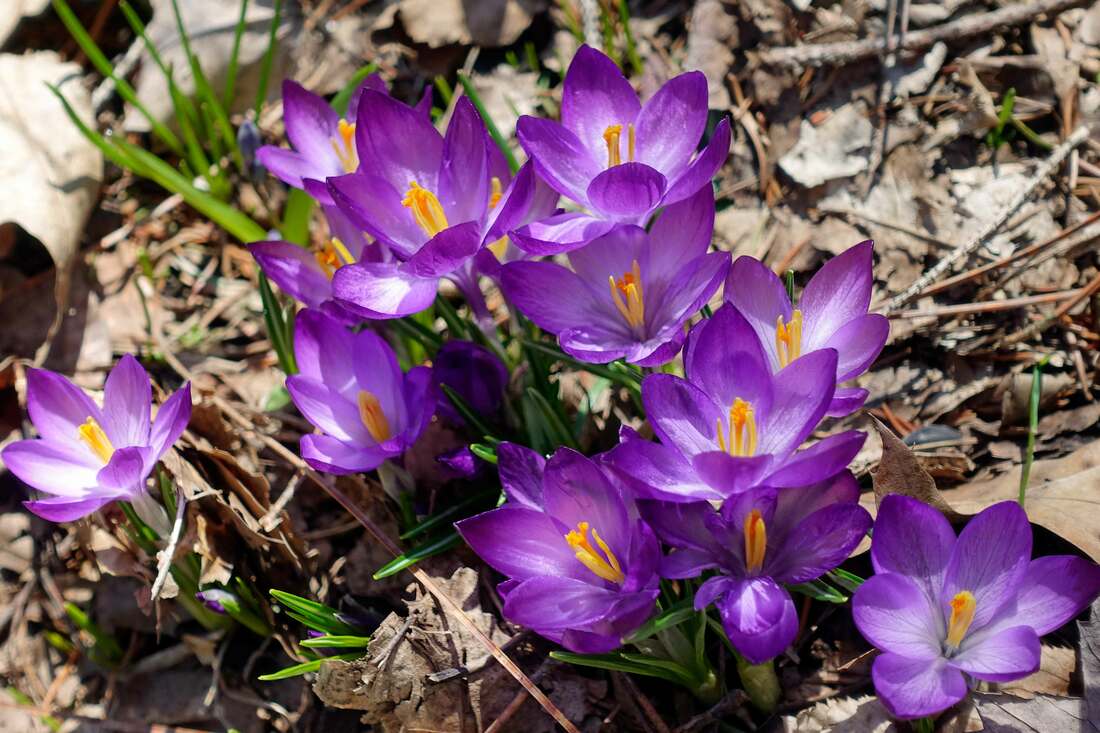
​The good news:  My first blooms of the season, crocus!  The bad news:  I have lost my garlic!  The good news:  The garlic has been found and rhubarb is poking through. (Note to self:  label the garlic rows in the fall.)  Spring has started in spite of the remaining snow piles and ice still on the lake. 

Read More
0 Comments

The Exotic Garden

4/13/2019

0 Comments

 
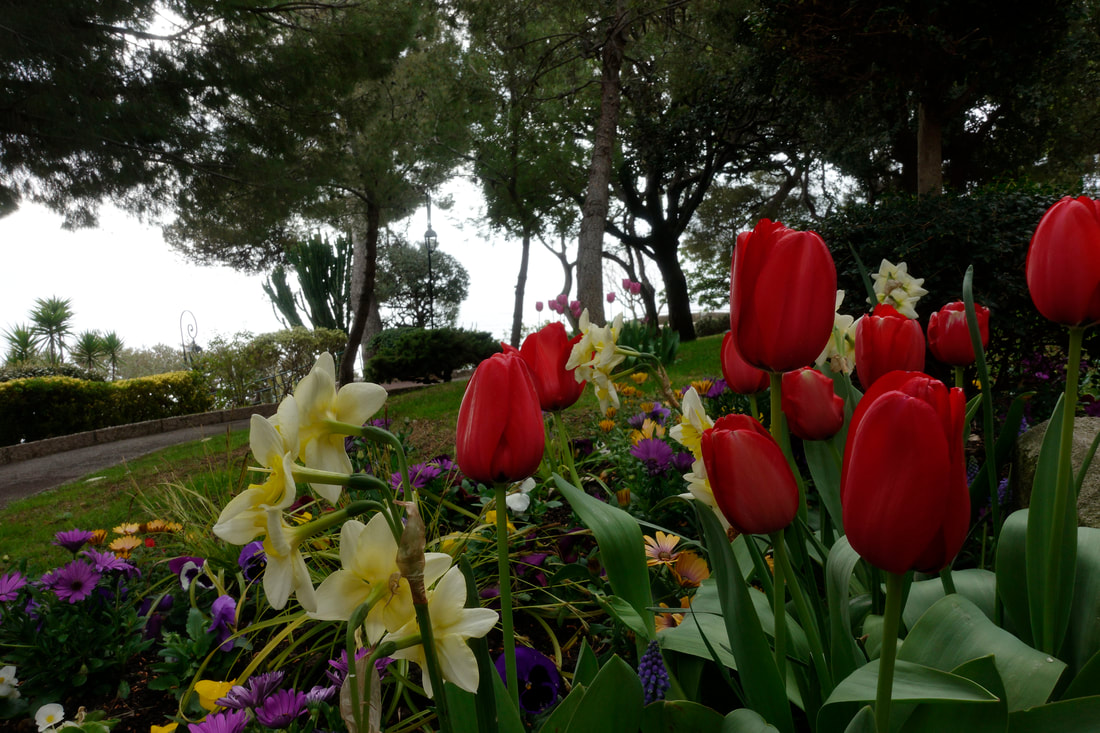
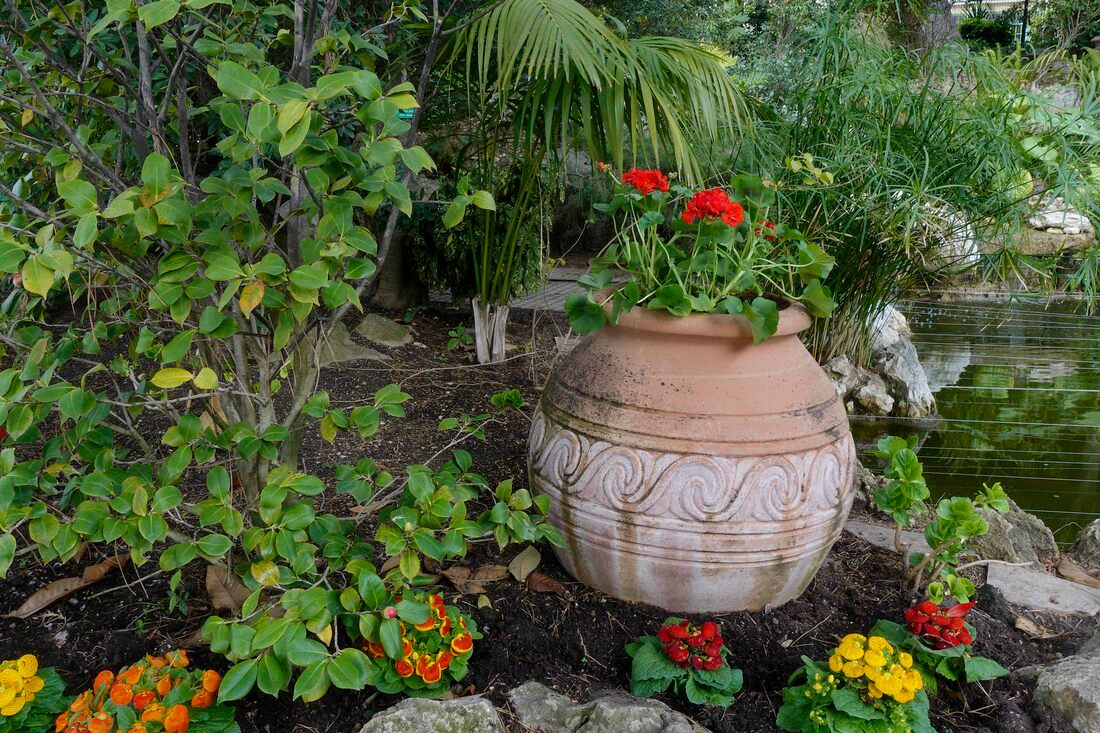
Images from The Exotic Garden (address:  62 Boulevard du Jardin Exotique, Monaco)
Lower left is the harbor, our ship the Viking Star is the bigger one on the far right (but not that much bigger than some of the private yachts). 
On our Mediterranean cruise this March we were fortunate to stop at the Exotic Gardens of Monaco.  It is amazing what you can do when (1) you are the king of a principality, (2) you are rich enough to employ several hundred gardeners, and (3) have several generations of family that contribute to the garden. 
 
Although we did not see the entire garden, what we did see was impressive.  These four acres are set on a rocky hillside and was opened in 1933 by Prince Albert I.  Although dominated by succulents, there are also roses and I even found some spring bulbs.  Only later did I pause to think about how that was possible in this temperate climate with not enough of a cold period for bulbs to bloom naturally.  I would hazard a guess that they kept the bulbs in cold storage and planted them outside to enjoy this spring.  Just like we would do to force bulbs, except on a larger scale.  Again, money and labor can create a wonderful garden. 
 
Most of all I love the address of this garden. 
​Wouldn’t you love to live on Boulevard du Jardin Exotique?  
0 Comments
<<Previous
Forward>>

    Classes


    ​Handouts for programs ​are on the ​ "Classes" tab. 
    ***************
    ​Check out my Garden Course catalog if you are interested in  a presentation to your group - Click Here


    Archives

    March 2026
    October 2025
    April 2025
    March 2025
    December 2024
    September 2024
    August 2024
    January 2024
    November 2022
    April 2022
    August 2021
    April 2021
    March 2021
    January 2021
    August 2020
    May 2020
    April 2020
    March 2020
    January 2020
    November 2019
    September 2019
    August 2019
    July 2019
    June 2019
    May 2019
    April 2019
    March 2019
    February 2019
    January 2019
    December 2018
    November 2018
    October 2018
    September 2018
    August 2018
    July 2018
    June 2018
    May 2018
    April 2018
    March 2018
    February 2018
    January 2018
    October 2017
    September 2017
    August 2017
    July 2017
    June 2017
    May 2017

    Categories

    All
    Annuals
    Fall
    Garden Events
    Garden Trends
    Garden Visits
    Low Maintenance
    Miscellaneous
    Monthly Calendar
    Perennial & Biennial
    Spring
    Summer
    Travel
    Trees And Shrubs
    Vegetables
    Winter

    RSS Feed

Powered by Create your own unique website with customizable templates.
  • Blog
  • Classes
  • Picture Gallery
  • Contact